For Individuals For Organisations
checklist

Neurodivergent Communication Checklist

Simple, practical ways to make workplace communication clearer, more inclusive and easier to process.

Clear communication benefits everyone, but it can make a particularly meaningful difference for neurodivergent people.

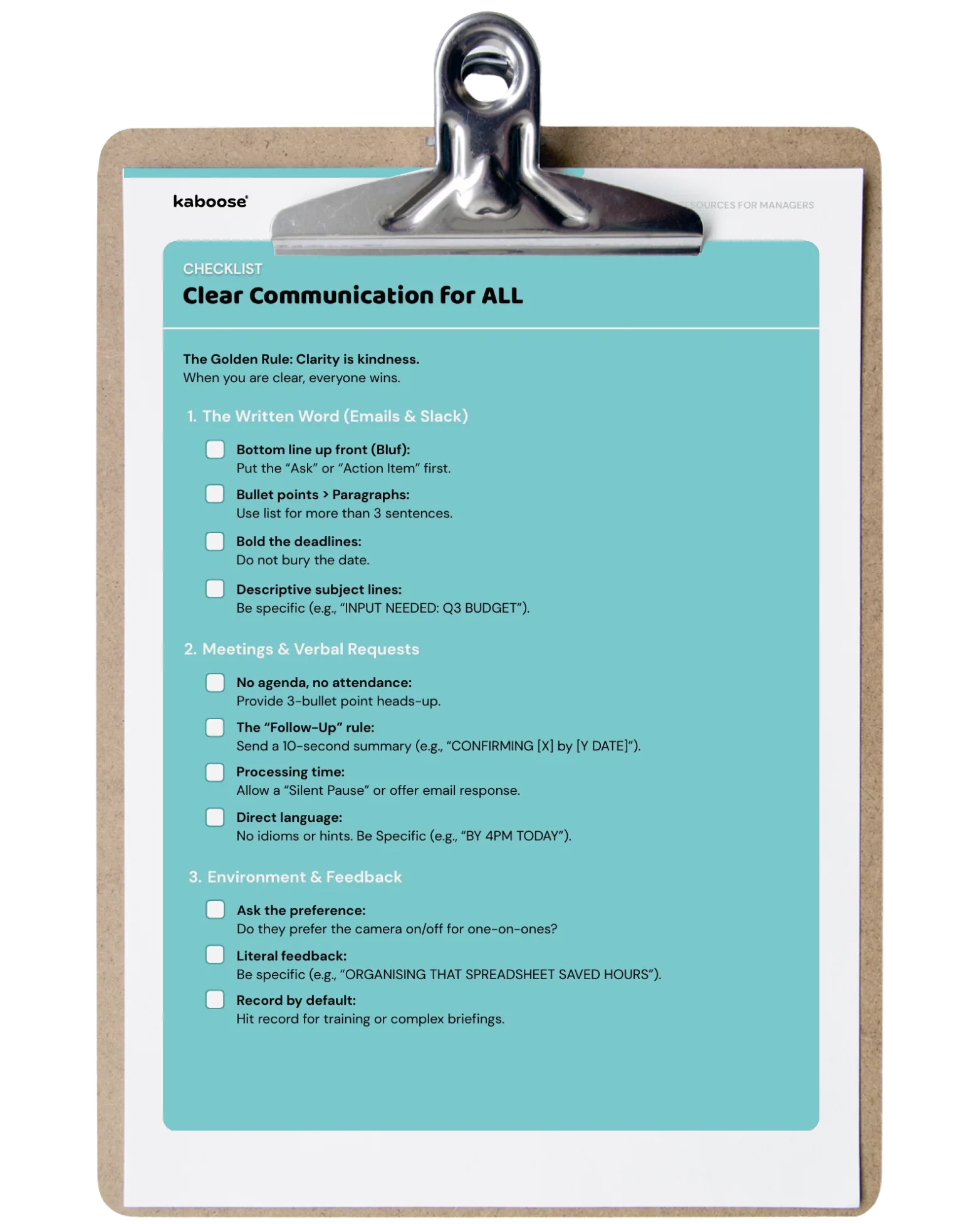
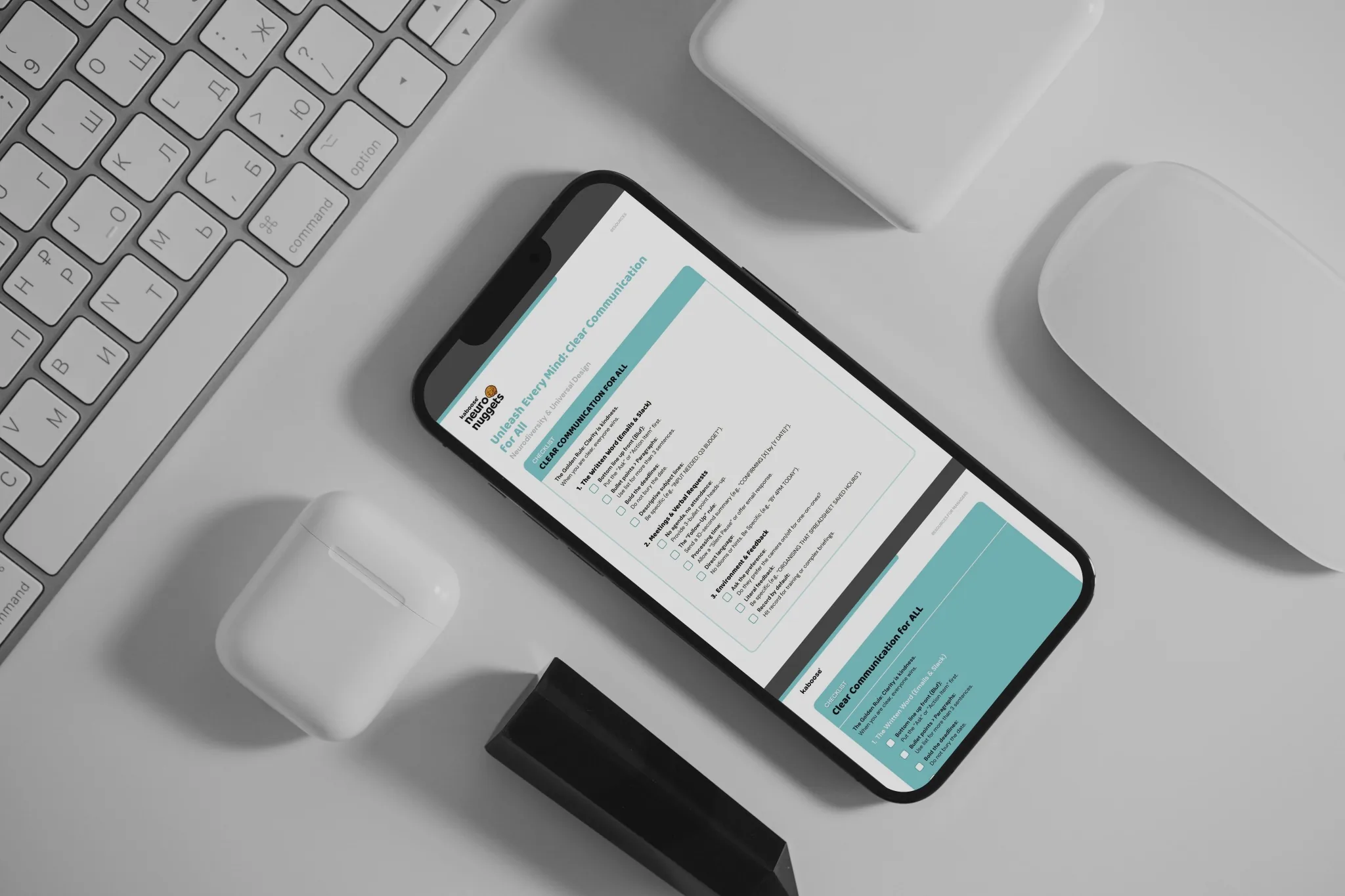
This free workplace communication checklist gives managers, teams and colleagues practical ways to reduce ambiguity, make expectations clearer and communicate in ways that work for more people.

Inside, you’ll find straightforward tips for emails and Slack messages, meetings, verbal requests and feedback.

WHY IT MATTERS

Clear communication supports neurodivergent employees

Workplace communication often relies on unwritten expectations, vague language, implied meaning and information buried in long messages.

Small changes can make communication easier to understand and act on.

The checklist is built around a simple principle:

Clarity is kindness.

That can mean putting the action item first, making deadlines obvious, using direct language and allowing people time to process before responding.

These are simple habits that can improve communication for neurodivergent employees while also making everyday work clearer for the wider team.
WHAT YOU’LL LEARN

What’s inside the neurodivergent communication checklist?

The free checklist includes practical workplace communication tips across three everyday areas.

Clearer emails and Slack messages

Make written communication easier to scan and understand by:


  • putting the ask or action item first
  • using bullet points instead of long paragraphs
  • making deadlines easy to find
  • writing clear, descriptive subject lines


These recommendations are taken directly from the checklist’s written communication section.

Accessible meetings and plain communication

Make meetings and conversations easier to prepare for and process by:


  • sharing a short agenda beforehand
  • following up with a concise written summary
  • allowing processing time
  • using direct rather than implied language


The checklist also encourages giving people the option to respond in writing when that works better for them.

Clearer feedback and communication preferences

The checklist also covers practical ways to make feedback and everyday interactions more specific, including:


  • asking about communication preferences
  • being literal and specific when giving feedback
  • recording training or complex briefings where appropriate
WHO IT’S FOR

A practical resource for more inclusive teams

This neurodivergent communication checklist is useful for:

  • managers and team leaders
  • HR and people teams
  • workplace wellbeing and inclusion teams
  • colleagues working in neurodiverse teams
  • organisations looking to improve inclusive communication

You don’t need to wait for someone to disclose that they are neurodivergent before using clearer communication practices.

The principles in this checklist are designed to make communication easier for everyone.

PUT IT INTO PRACTICE

Make workplace communication easier to understand

You don’t need a complicated communication framework.

Often, better communication comes down to making expectations, actions and information easier to find and easier to interpret.

Use the checklist as a quick reference before sending an email, running a meeting, giving feedback or briefing your team.

Explore more practical neurodiversity resources

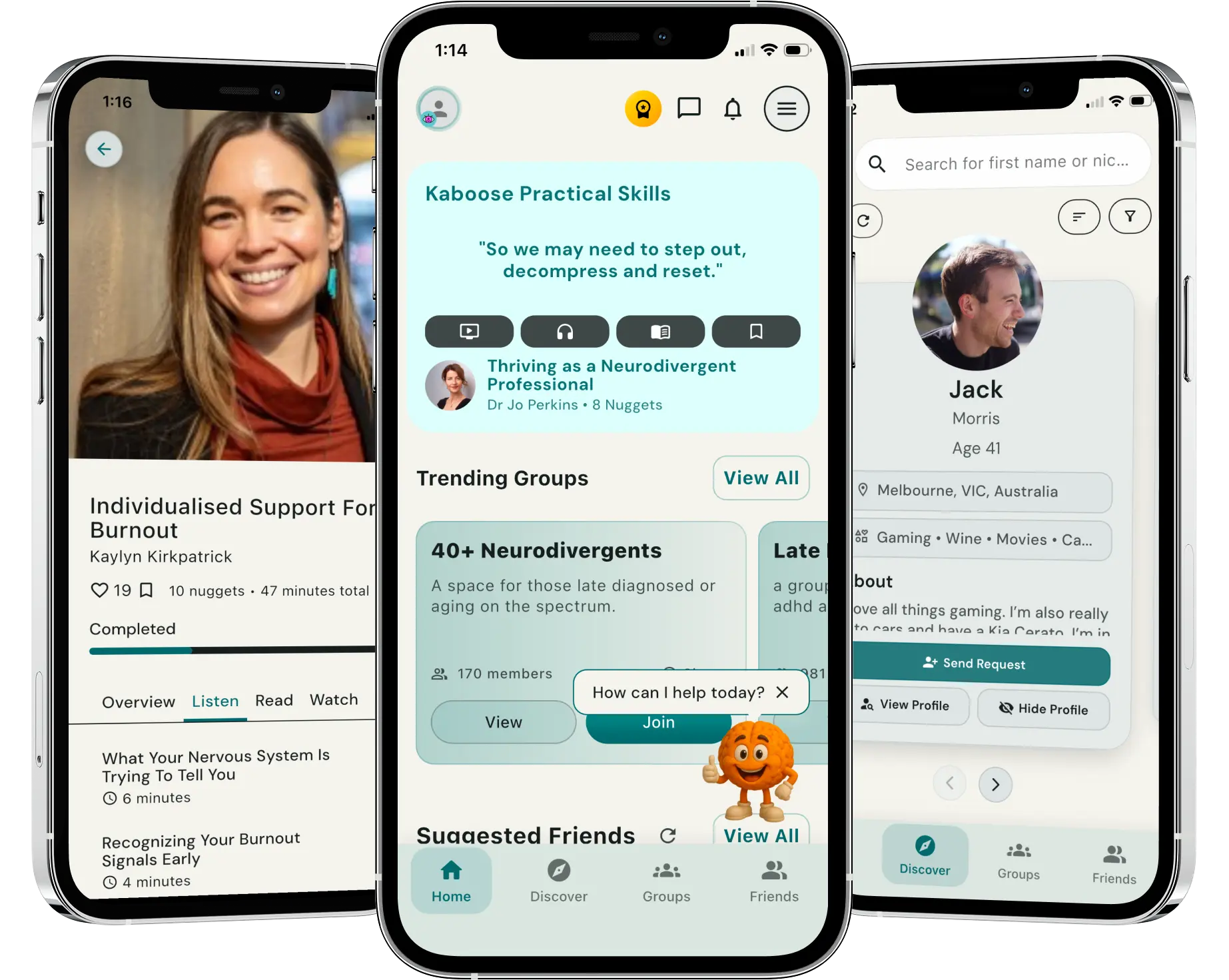
Kaboose Neuro Nuggets are short, practical learning resources designed to help people understand neurodivergence and navigate everyday situations.

Explore learning around communication, feedback, burnout, workplace adjustments and more, with content available in video, audio and text.