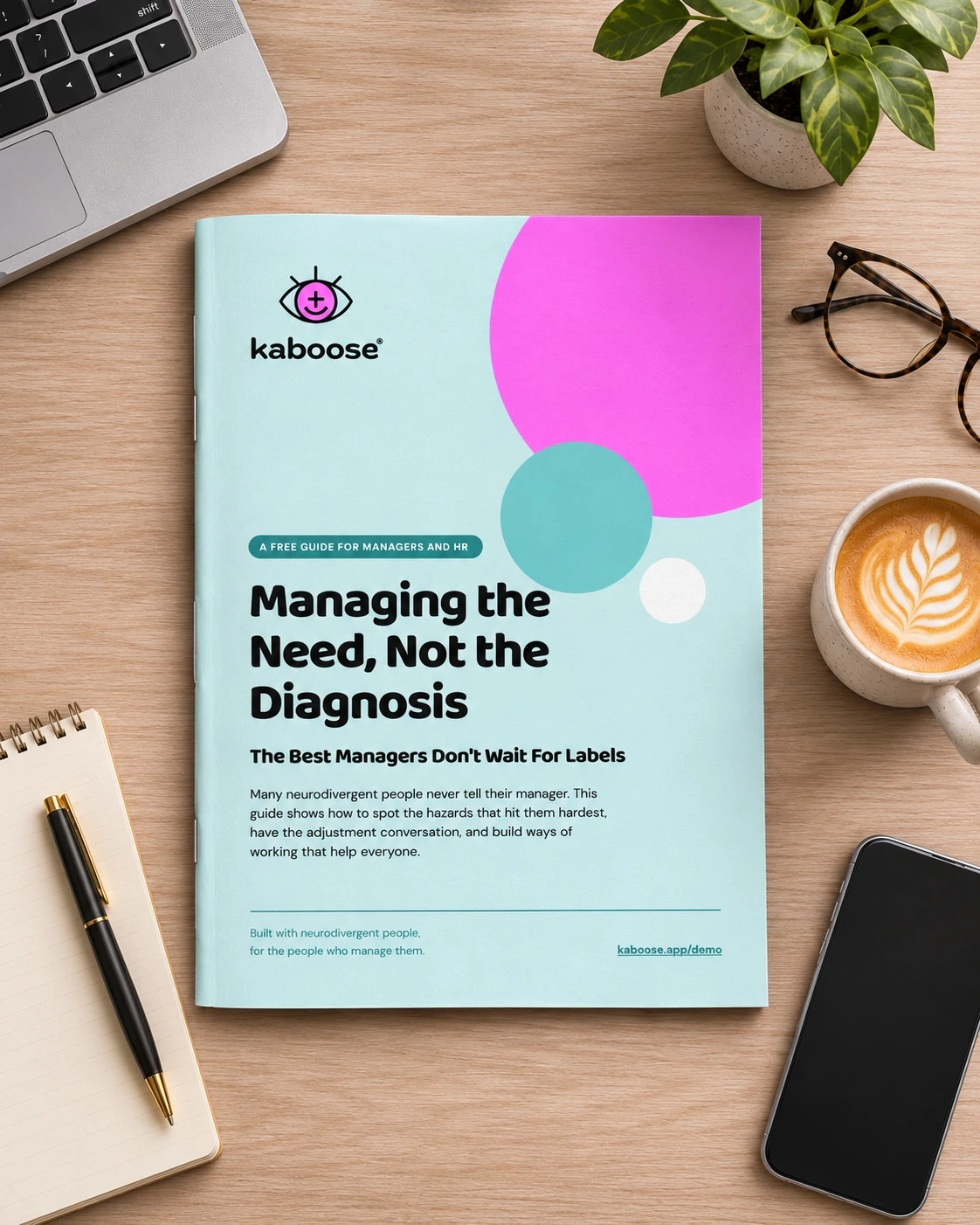
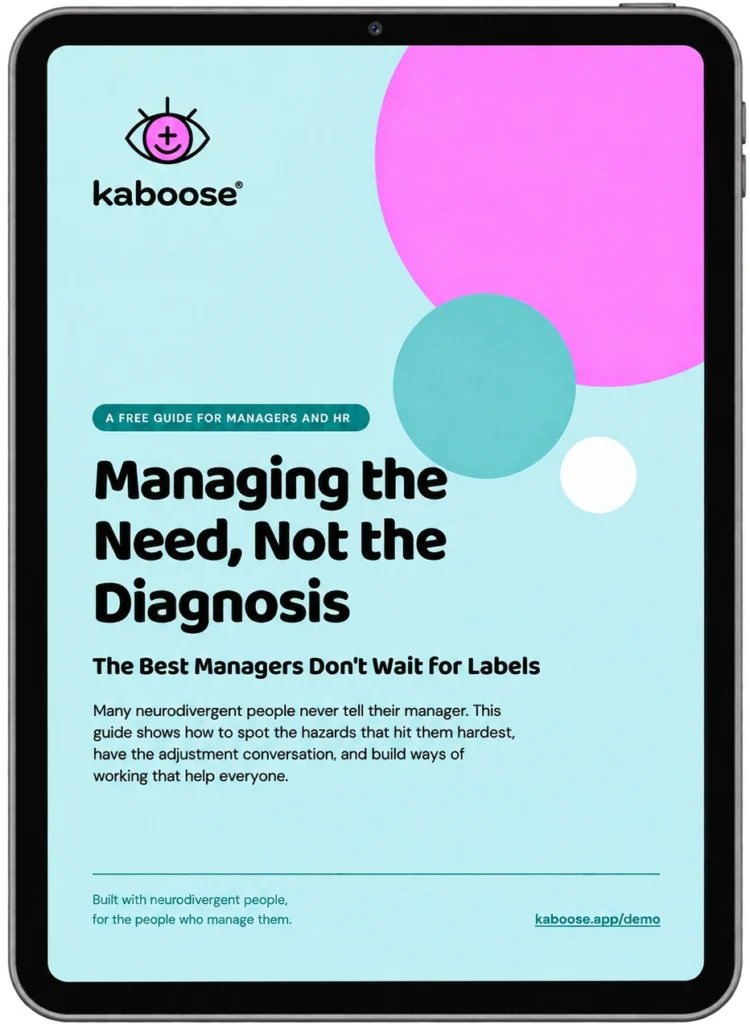
Many neurodivergent people never tell their manager, so support that waits for disclosure often arrives too late. This free 11-page guide gives managers and HR a practical way to approach workplace adjustments for neurodivergent employees: spot the hazards that hit hardest, have the adjustment conversation, and build ways of working that help the whole team.
Free 11-page PDF, emailed to you straight away.
Five practical tools, each built for the places support actually happens: one-on-ones, briefings, deadlines and feedback.
Neurodivergence covers autism, ADHD, dyslexia, dyspraxia and more. Many neurodivergent adults mask, hiding or adjusting their natural responses to fit in. From the outside, masking can look like someone coping fine.
Disclosure is often the exception. In ADHD Australia’s 2022 survey, 40% of employees with ADHD hadn’t told their workplace, citing concern they’d be treated differently. If support only starts after someone discloses, the people masking hardest get the least help, and you may first hear about it at their resignation.
The guide’s answer is a shift in the question. Instead of “What’s your condition?”, ask “What would help you do this well?” Adjustments then become normal tuning, like choosing a chair, and they help people who never disclose.
Under the Disability Discrimination Act 1992 and state laws, employers must make reasonable adjustments for a worker with disability unless it would cause unjustifiable hardship. Work health and safety laws also require employers to manage psychosocial risks so far as reasonably practicable. Our article on psychosocial hazards and neurodiversity explains how those risks apply at work.
Neither duty is met by a policy on a shared drive. Both play out in briefings, deadlines, meetings and feedback, which is where the guide focuses. It’s general information, not legal advice.
It might be difficult sensing how long things take, or a task with no clear first step. Ask, “What would make this easier to start?” Then try breaking the work into dated steps with a check-in halfway.
Spoken instructions may not have stuck, or there’s a rule everyone else picked up without being told. Follow every verbal briefing with a short written recap. Our free neurodivergent communication checklist has more ideas like this.
Notice the pattern: each suggestion changes the work, not the person. That’s why it’s safe to offer anyone. If a problem continues after a fair trial, you’re having a genuine performance conversation on solid ground.
No. You can talk with anyone about how their work gets done. If a formal adjustment or government funding later needs evidence, HR can handle that privately. For more detail, read our guide to reasonable adjustments without a diagnosis.
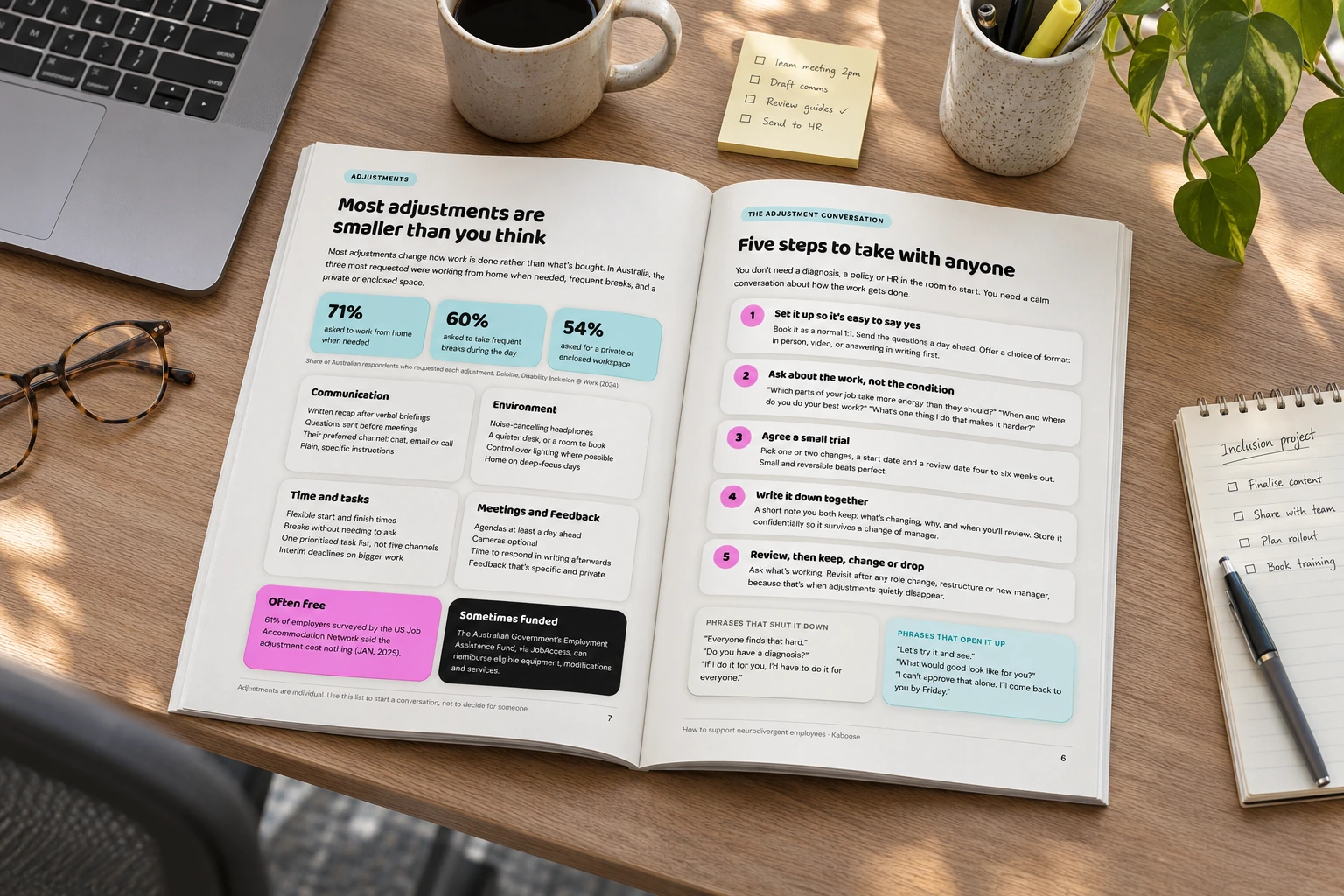
Most change how work is done rather than what’s bought. In Deloitte’s 2024 research, the three adjustments Australian respondents requested most were working from home when needed, frequent breaks, and a private or enclosed workspace. Where equipment is needed, the Employment Assistance Fund, via JobAccess, can reimburse eligible costs.
Thank them. Ask what, if anything, they’d like to change, and who else they want to know. Don’t share it without their consent. Our article on handling a disclosure conversation at work covers what to say next.
You don’t need every answer. Get the guide, pick one idea, and try it in your next one-on-one.
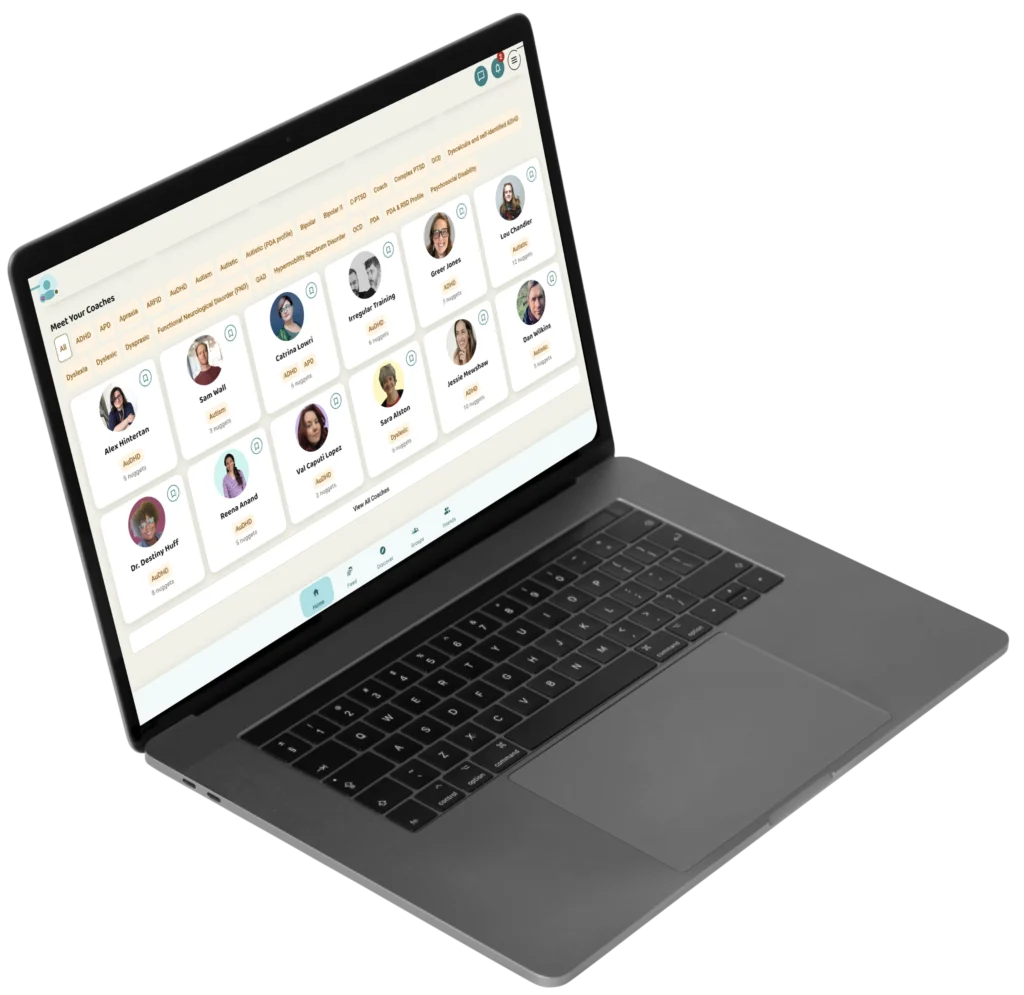
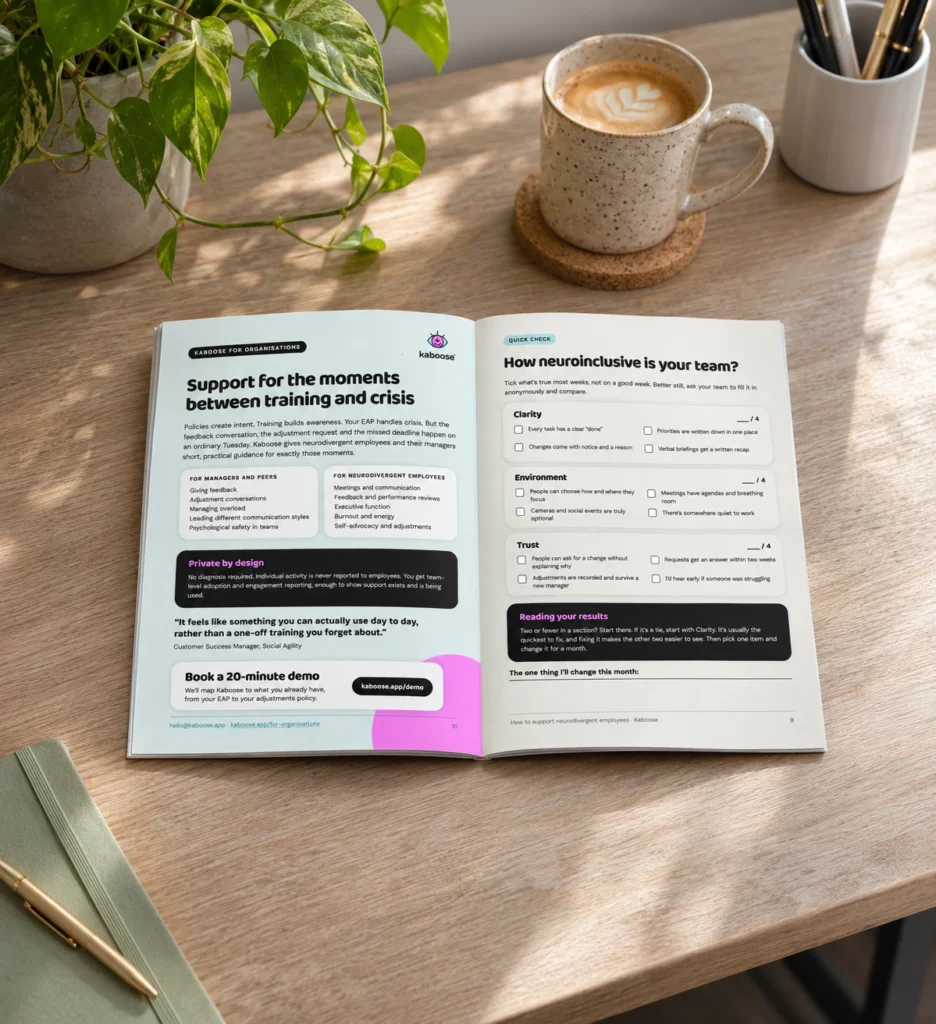
Kaboose is built with neurodivergent people, not just written about them. Beyond this guide, we give managers and employees short, practical support for the moments between training and crisis: the feedback conversation, the adjustment request, the missed deadline. No diagnosis required, and individual activity is never reported to employers